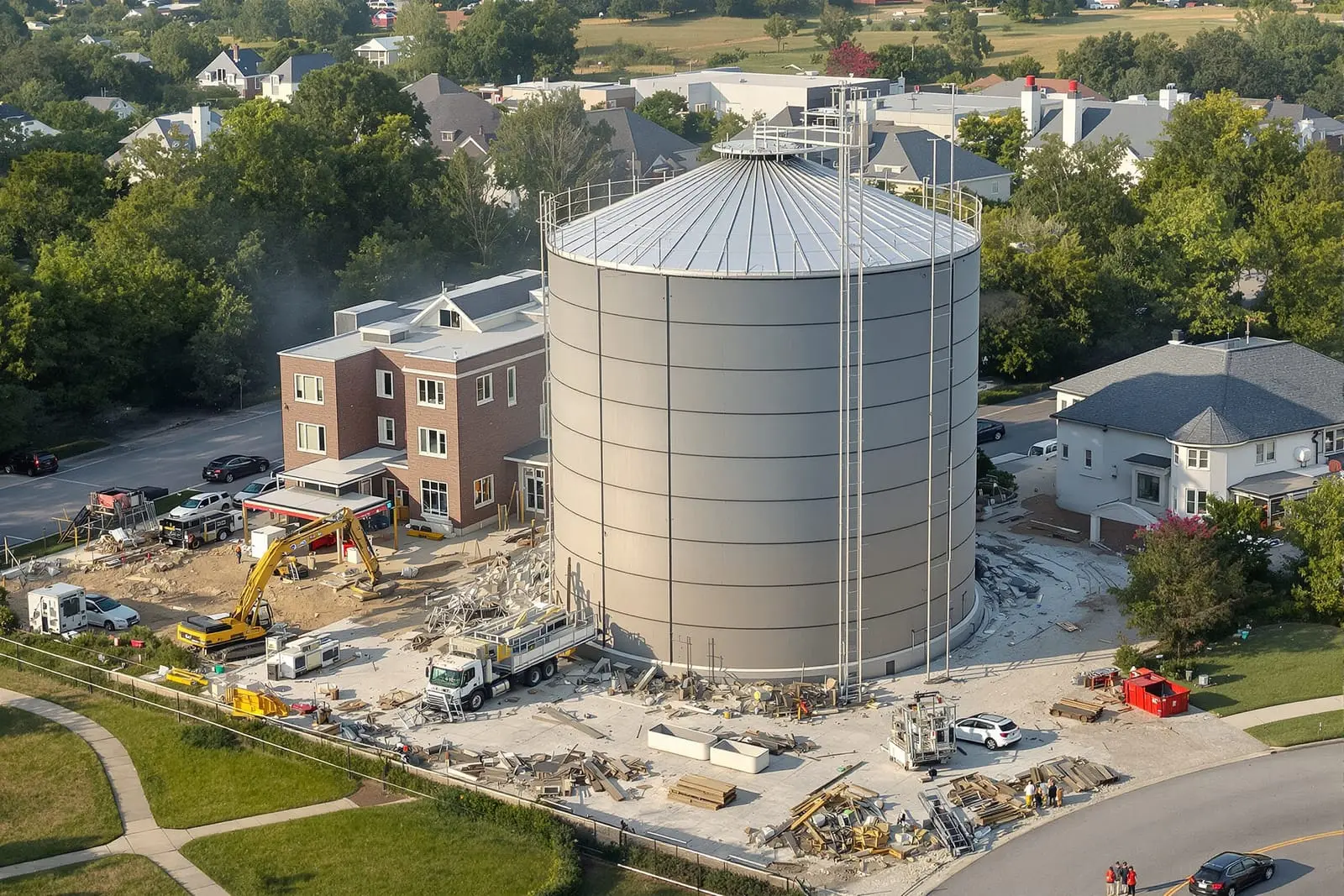
We offer tank demolition in Los Angeles, CA for above ground storage tanks, silos, and stacks at industrial and agricultural sites. Our crews clean and inert vessels when needed, then cut and dismantle steel or concrete structures in controlled sections. Debris is processed and hauled offsite quickly.
Wrexo Demolition Los Angeles provides professional tank demolition throughout Los Angeles, CA and the surrounding area. Our licensed, insured crew delivers safe, clean, on-time work with a free estimate before anything begins. Call (213) 319-5265 or request your free quote.
Tank, Silo and Stack Demolition in Los Angeles
Tank, silo and stack demolition is specialized work that calls for more than a wrecking ball. In Los Angeles, these structures are often packed into tight industrial sites, refineries, food processing plants and older manufacturing yards. Wrexo Demolition Los Angeles focuses on controlled dismantling that protects nearby equipment, utilities and neighboring properties while keeping your project on schedule.
Most tank demolition jobs in Los Angeles involve steel or reinforced concrete tanks that have held fuel, chemicals, water, asphalt, food products or wastewater. Silos are often concrete, steel or bolted corrugated panels. Stacks and chimneys can be brick, concrete or steel flues. Each material behaves differently when cut or broken, so the method we choose is based on what the structure is made of, what it held and the access around it.
Local conditions matter. Many older tanks and stacks in the LA area predate modern codes, so we often find lead based coatings, asbestos insulation on flues, deteriorated concrete and undocumented modifications. The dry climate speeds exterior corrosion, especially near the Port of Los Angeles and coastal valleys with salt in the air, which can make structures weaker than they look. Our planning and pricing account for these realities so there are fewer surprises once demolition begins.
How Wrexo Plans a Tank Demolition Project
Every tank, silo or stack demolition project at Wrexo Demolition Los Angeles starts with a site visit and documentation review. We look at original drawings if available, tank capacity, wall thickness, roof type, foundations and product history. For tanks that held fuel, solvents or industrial chemicals, we verify cleaning and gas free certifications or arrange for them before any cutting begins. A confined space entry plan is prepared if anyone must go inside.
We map utilities around the structure, such as overhead power that is common in older LA industrial areas, buried process lines, fire water mains and site storm drains. This allows us to plan crane placement, cutting zones and debris paths without risking a utility strike. On stacks and tall silos, we evaluate access for manlifts, scaffolding or rope access teams, since many sites have tight alleys or overhead piping.
Once we understand the structure and access, we choose a demolition sequence. This can be top down dismantling using manlifts or scaffolding, sectional removal with cranes, mechanical shearing from the base, or a planned directional fall for isolated tanks on open land. In Los Angeles, full implosions with explosives are rarely appropriate due to density and air quality concerns, so we focus on mechanical and torch based methods that give us tight control over where every section lands.
Methods and Equipment Used for Safe Removal
Tank demolition options vary based on height, material and what is around the structure. For carbon steel tanks, a common approach is to start at the roof. We cut man sized openings to ventilate, then use torch cutting or cold cutting saws to section the roof and shell into controlled panels. These panels are lowered with a crane or guided down with excavators equipped with grapples. For food grade or stainless tanks, we often prioritize clean cuts so the scrap value stays high and offsets part of your cost.
For tall silos and stacks, especially those over 60 feet, top down dismantling is usually safest in Los Angeles. We install temporary platforms, swing stages or manlifts, then break or cut the structure in manageable lifts. Concrete sections are chipped using breakers or split with saws, then rigged and craned to the ground. Steel stacks may be cut into ring sections or vertical strips, depending on access and crane capacity.
Where there is enough open space and no sensitive neighbors, we may use controlled mechanical felling. This involves cutting wedge sections at the base of a steel tank, reinforcing with temporary supports, then pulling with heavy equipment or winches so the tank lays down in a pre cleared fall zone. Detailed calculations for center of gravity and soil bearing are done first so the tank falls predictably and does not bounce into adjacent structures.
Throughout the process, we use fire blankets, spark shields and water spray to control hot work hazards and dust, particularly important in the dry LA climate during Santa Ana winds. Equipment commonly on site includes excavators with shears and grapples, skid steers, mobile cranes, air compressors, oxy fuel torches, plasma cutters, concrete saws and negative air machines if interior dust control is required.
Hazard Control, Environmental Compliance and LA Rules
Tank demolition in Los Angeles often triggers multiple regulations, especially when dealing with fuel, chemical or wastewater tanks, as well as stacks that handled process exhaust. Wrexo Demolition Los Angeles coordinates with environmental consultants or your in house EHS staff to make sure cleaning, sampling and hazardous material removal are completed before we start structural work.
Common issues include residual sludge at the bottom of tanks, lead based paint, asbestos pipe insulation on stacks, refractory linings inside process towers, and contaminated soils around leaking foundations. These materials must be profiled and sent to appropriate recycling or disposal facilities. We separate clean scrap metal from contaminated materials so you get the best possible rebate on steel, stainless and non ferrous metals.
Local air quality is heavily regulated by the South Coast Air Quality Management District. For many stack or refractory removal jobs, notifications are required and specific dust control measures must be in place. We use water mist cannons and localized wetting to limit airborne dust, but we manage runoff carefully so it does not enter storm drains, which are regulated by the City of Los Angeles and the Regional Water Quality Control Board.
Noise restrictions and working hour limits also affect planning, especially near residential areas, schools or hospitals. We schedule the loudest operations such as concrete breaking and shearing during approved windows and may phase work to stay within city noise ordinances. These constraints can influence both project duration and crew size, which is why we discuss them openly during estimating.
What Drives Cost and Schedule for Demolition
The price of a tank, silo or stack demolition in Los Angeles is driven by more than height and diameter. Wrexo Demolition Los Angeles calculates cost by looking at four main categories: structural complexity, access, environmental conditions and disposal logistics.
Structural complexity includes height, wall thickness, internal structures such as baffles, mixers or internal piping, and attached platforms or ladders. Tanks within tank farms, racks or close to buildings take longer because there is less room for cranes and fall zones. Tanks that share walls or roofs with adjacent structures often require surgical cuts and hand work instead of pure machine demolition.
Access is a major factor in older industrial parts of LA, like Vernon, Commerce and the Harbor area. Narrow streets, low overhead power lines and tight yards may require smaller cranes with more lifts, or additional rigging to move sections to a staging area. If we must build extensive scaffolding or use specialized manlifts, labor hours increase.
Environmental conditions cover cleaning status, hazardous coatings, soil contamination and required air monitoring. A cleaned and certified water tank on a warehouse roof might be a straightforward job. A diesel tank farm with stained concrete, nearby catch basins and suspected soil impact under the ringwalls can take much longer because each step must be verified and documented.
Disposal and recycling logistics affect both timing and net cost. LA traffic and transfer station hours limit how many loads can leave the site in a day. Heavy concrete foundations may need to be broken, stockpiled and crushed or hauled to approved facilities. High scrap metal content can offset a noticeable portion of the project price, especially for stainless or alloy tanks used in food, beverage or pharmaceutical operations.
What Los Angeles Clients Should Know Before Hiring
Before you contract any company for tank demolition, take stock of your site and documentation. Gather any available tank or stack drawings, past inspection reports, cleaning certificates and environmental studies. Knowing what was stored, for how long and when the tank was last cleaned helps Wrexo Demolition Los Angeles design a safer, more accurate plan and reduces contingency in your estimate.
Decide your end goal for the area. Some clients only need the structure down to grade. Others want full removal of ringwalls, sub grade anchors and associated piping so the pad is ready for new equipment or building foundations. Clarifying your final condition early avoids change orders and helps us coordinate with future construction trades.
Schedule around local conditions. In Los Angeles, extreme summer heat, wildfire smoke days and Santa Ana wind events can affect hot work, crane operation and dust control. If your facility has seasonal peaks or outages, we can align noisy or disruptive work with those windows. For facilities near residential zones, expect tighter noise and working hour limits and allow some buffer in your timeline.
Finally, look at more than the lowest price. Ask how the contractor will access the structure, what demolition sequence they plan to use, how they will manage residual product and hazardous materials, and what recycling credits you can expect. A detailed written scope that matches the realities of your Los Angeles site is usually worth more than a vague low number that leads to delays and unexpected costs later.
“
Professional tank, silo and stack demolition, done right the first time, quality materials, honest pricing, and results that last.
Wrexo Demolition Los Angeles
Tank, Silo and Stack Demolition Across Our Service Area