Home › Emergency and Disaster Commercial Demolition
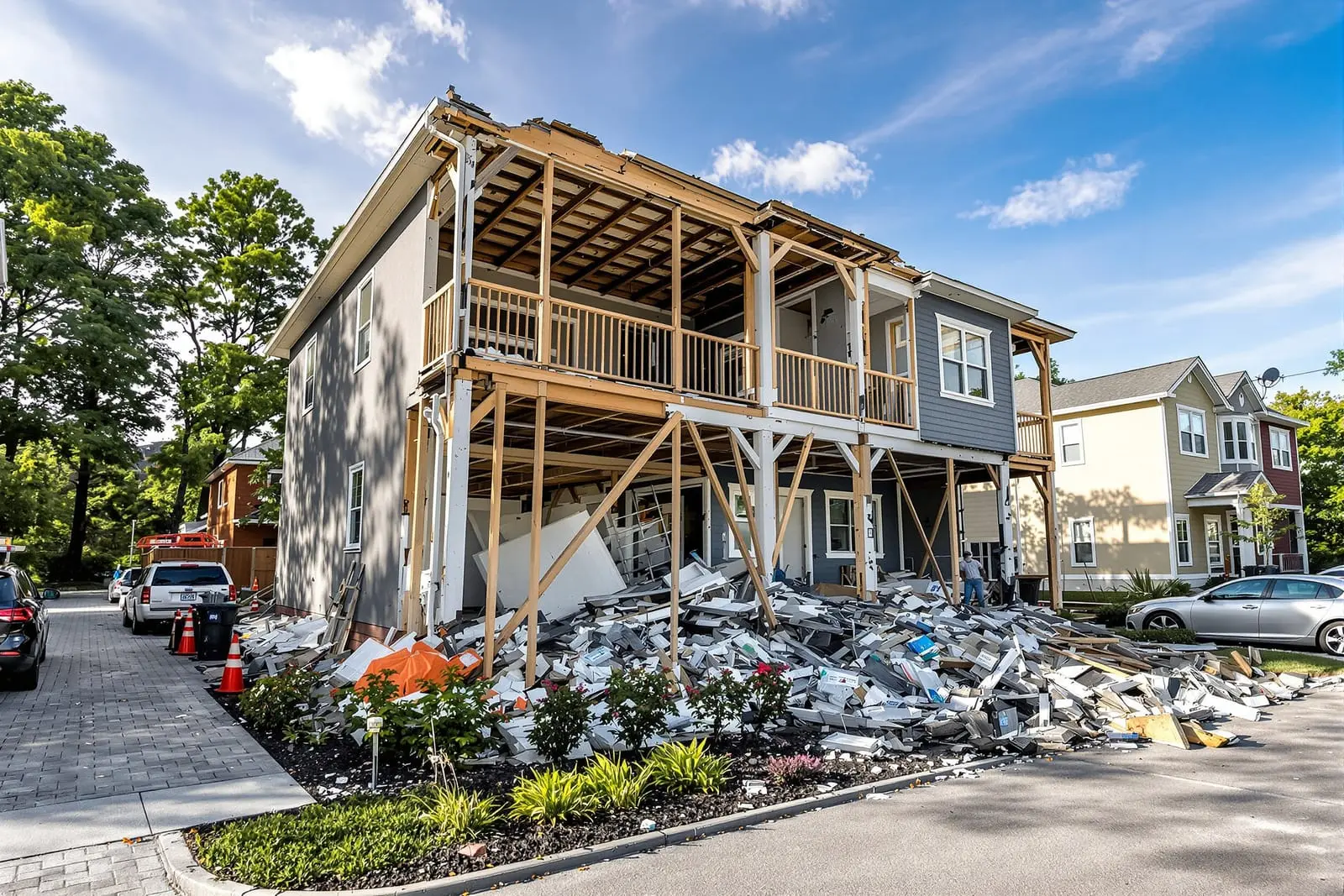
We provide emergency commercial demolition in Los Angeles, CA when fire, storms, or structural failure make buildings unsafe. Our team quickly stabilizes or removes damaged sections, coordinates with authorities, and secures sites to protect the public. Rapid response helps reduce risk and speed up recovery.
Wrexo Demolition Los Angeles provides professional emergency commercial demolition throughout Los Angeles, CA and the surrounding area. Our licensed, insured crew delivers safe, clean, on-time work with a free estimate before anything begins. Call (213) 319-5265 or request your free quote.
Emergency Commercial Demolition in Los Angeles When Minutes Matter
When a fire, earthquake, vehicle impact, or burst main hits your building, you do not have days to wait for a quote. You need unsafe structures made safe right away so people can reenter surrounding areas and your business can start recovery. Wrexo Demolition Los Angeles focuses on emergency commercial demolition throughout the LA area, from Downtown and Koreatown to the Valley and the Harbor. Our crews are used to being called out at 2 a.m. after a warehouse fire or during Santa Ana wind events when roofing and signage fail.
Our priority is to stabilize the situation, not just swing excavators. That starts with a rapid visual assessment of structural risk. We look at what type of construction you have, like tilt up concrete, soft story retail, older unreinforced masonry, steel frame, or mixed use with residential above. Different structures fail in different ways during earthquakes or fire, and we tailor the demolition method to prevent progressive collapse and protect neighboring buildings.
You talk directly with a decision maker, not a call center. While one part of our team is reviewing building plans and photos, another is mobilizing shoring materials, fencing, and equipment from our local yards. In many Los Angeles emergencies we can be on site the same day with a foreman, operator, and labor crew, ready to coordinate with LADBS inspectors, the Fire Department, and your insurance adjuster so work can start the right way and as fast as the city allows.
How Emergency and Disaster Commercial Demolition Actually Works
Emergency commercial demolition in Los Angeles almost always happens in phases. The first is make safe and partial demo. Our crew secures the perimeter with fencing and tape, locates utilities, and confirms shutoffs with LADWP, SoCal Gas, or your private provider. We do not trust labels in damaged electrical rooms, we test, lock out, and tag out so firefighters, adjusters, and our team can move without new hazards.
Next is structural triage. We use laser levels, drones if the airspace and conditions allow, and old fashioned ladders and tape measures to understand what sections are still carrying load. Flame damaged steel, spalled concrete, buckled roof trusses, or leaning CMU walls are flagged. We then decide what needs controlled demolition right away and what can be temporarily shored so you do not lose more of the building than necessary. Preserving intact sections can significantly reduce rebuilding time and cost.
Actual demolition methods depend on access and building type. In tight Los Angeles streets, such as older commercial corridors, we often combine hand demolition using saws and jackhammers with compact excavators or skid steers to avoid damaging shared walls. For larger sites like industrial parks near Vernon or Commerce, we deploy high reach excavators to pull down unsafe panels or roof sections from a stable distance. For earthquake cracked parapets and signage, we often work from aerial lifts, carefully dismantling elements piece by piece to avoid falling debris into sidewalks and alleys.
Throughout the process we are separating materials as much as possible in real time. Concrete and masonry go into one stream, metal another, and general debris another. LA area disposal sites charge differently depending on how clean the loads are, so efficient sorting during emergency demolition directly affects your final bill. It also speeds up clearance since recyclers accept sorted loads faster than mixed rubble.
What Drives Cost and Timeline for Emergency Commercial Demolition
In emergencies, the big cost drivers are access, structural risk, and regulatory requirements, not just square footage. A single story big box with wide access in the parking lot is usually faster and less costly to partially demo than a smaller two story commercial building wedged between neighbors on a busy street like Ventura or Sunset. If we need night work, lane closures, or traffic control, those items add labor and permit fees but may still save overall time.
The type of damage matters too. Fire damaged buildings often have heavy waterlogged debris and weakened roofs that cannot be walked on, so we may need more machine work and more hauling. Earthquake and vehicle impact damage can leave structures twisted and in tension, which requires slower, more surgical dismantling to avoid sudden collapse. Wind events that rip off roofs or signage can create hazards several stories up, which then involve lifts, rigging, and sometimes crane support.
Environmental hazards are another cost and schedule factor. Many older Los Angeles commercial buildings contain asbestos in roofing, pipe insulation, floor tiles, or window glazing, and lead in paint and coatings. In an emergency, the city and Cal/OSHA still expect these to be handled properly. We work with licensed abatement partners who can mobilize quickly. Sometimes that means a limited asbestos survey and targeted removal, which lets us move ahead in the most critical zones while broader testing continues in safer areas.
Disposal fees in LA County are significant, and they change based on weight and content. Concrete and metal that can be recycled at local facilities reduce those fees. Mixed trash, burned contents, and contaminated soils or absorbents from chemical spills cost more. When we walk your site, we are already estimating debris streams and tonnage, so we can give you a realistic range rather than a guess that balloons later.
Working With Insurance, City Inspectors, and Your Recovery Team
Emergency commercial demolition usually sits at the intersection of multiple parties: your insurer, the City of Los Angeles, fire investigators, and sometimes tenants or neighboring properties. Wrexo Demolition Los Angeles spends as much time coordinating with these players as we do running machines, because that is what keeps your project moving.
With insurance, documentation is everything. We photograph and video conditions before, during, and after selective demolition, tag structural elements that are removed, and log debris volumes and material types. Adjusters and forensic engineers often need specific pieces, such as failed beams or electrical panels, preserved for investigation. We can carefully detach and store these components so you meet policy requirements and do not jeopardize coverage.
On the city side, we deal with emergency demolition permits, safety orders, and inspections. LADBS may red tag a building, then require a controlled demolition of specific walls or roof sections before lifting or modifying that tag. We help your design professional submit the needed sketches or shoring plans, and we schedule inspections around our work so there are no surprises. In historic or special overlay districts, there can be extra steps, and we walk you through those in plain language.
If you have tenants, shared parking, or common utilities, communication becomes safety critical. We can attend on site meetings with property managers and neighboring owners to explain what areas will be noisy, when dust control will be used, and how access will be maintained. Clear expectations reduce conflict, which in turn reduces delays and potential claims against your property during a stressful time.
Local Conditions, Safety Practices, and How to Choose an Emergency Demo Partner
Los Angeles has specific challenges for emergency commercial demolition that out of town companies often underestimate. Traffic and narrow access can change daily. Heat waves and Santa Ana winds affect dust and smoke behavior, which shapes our water use and air monitoring. We plan work hours around both city noise rules and your neighbors, and we avoid generating large dust plumes during peak smog or wind events by adjusting equipment use, misting, and debris handling.
Safety is built into our process, not bolted on at the end. Crews are trained for structural collapse awareness, not just general construction safety. We use real time communication, fall protection for any work at height, and spotters during equipment movement. Hot spots after fires are monitored, and we coordinate with the Fire Department when flare ups or remaining hazardous materials are suspected. We also pay close attention to pedestrian protection on busy sidewalks, with overhead protection or extended buffer zones when needed.
When you are choosing an emergency commercial demolition partner in Los Angeles, look for more than who can show up with an excavator. Ask how they separate emergency make safe work from long term demolition and rebuilding, how quickly they can obtain or assist with emergency permits, and whether they have handled similar structures to yours, like tilt up warehouses, small strip centers, mid rise office, or mixed use buildings. Ask specifically about asbestos testing and coordination with abatement, about how they protect neighboring buildings, and about their relationships with local disposal facilities.
Wrexo Demolition Los Angeles is local, which means our equipment yards, disposal partners, and crews are all nearby. That reduces mobilization time and lets us adjust staffing and machinery as conditions change. After the immediate emergency work is complete, we can also help you plan the remaining demolition or selective interior strip out so your rebuild team starts with a clean, safe, and code compliant shell.
“
Professional emergency and disaster commercial demolition, done right the first time, quality materials, honest pricing, and results that last.
Wrexo Demolition Los Angeles
Emergency and Disaster Commercial Demolition Across Our Service Area